Introduction
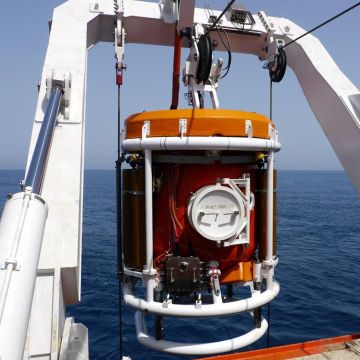
The diving bell has long been one of humanity’s most ingenious tools for venturing beneath the waves. Designed as a sealed chamber that carries breathable air into the depths, it has enabled explorers, researchers, and workers to operate far below the surface—well beyond what is possible with ordinary diving gear.
From its earliest, almost primitive forms to today’s highly engineered versions, this device has undergone centuries of refinement. Exploring its origins, mechanics, applications, and the innovations shaping its future reveals just how influential this technology has been in opening the underwater world to human discovery.
Overview of the Diving Bell
Definition and Purpose
At its core, a diving bell is a hollow, bell-shaped enclosure that descends underwater while keeping a pocket of air inside. This pressurized mini-environment allows divers to remain relatively dry and breathe comfortably at depths where conventional equipment would be insufficient.
Imagine a suspended air bubble that lets you linger beneath the surface without the constant demands of scuba gear—minus the curious fish that may peer inside.
How Diving Bells Operate
The principle is simple: as the bell is lowered, it traps air within its structure. Because the bottom remains open, divers can move in and out while the interior stays filled with breathable air. Weighted cables keep the bell steady so it doesn’t drift or rise unexpectedly.
It’s a bit like pinning down a floating container to prevent it from bobbing away—only in this case, it’s supporting human life below the waterline.
Historical Development and Evolution
Early Designs and Uses
The idea of using enclosed air to explore underwater dates back to antiquity. Ancient philosophers, including Aristotle, described crude versions made from submerged vessels. Centuries later, during the 1600s, inventors such as Cornelis Drebbel developed more practical bells capable of holding air for longer periods.
Early divers must have felt like they were climbing into wooden time capsules as they descended into unfamiliar waters.
Notable Historical Expeditions
By the 1800s, diving bells were already supporting scientific journeys. One example is the HMS Porpoise, which carried a bell for marine observation. These missions provided researchers with rare, close-up looks at sea life and underwater terrain, helping expand knowledge of ecosystems that had previously been inaccessible.
Modern Adaptations and Breakthroughs
Contemporary diving bells are far more sophisticated. Stronger materials, improved insulation, communication tools, and enhanced life-support systems make them reliable platforms for deep-sea work. What began as a simple wooden contraption is now a high-tech capsule capable of operating in extreme underwater environments.

Design and Construction Features
Materials Used
Modern bells are assembled from metals and composites able to withstand intense underwater pressure. Stainless steel, aluminum alloys, and thickened glass are commonly used, balancing durability with manageable weight—think of it as an armored shell slimmed down enough to be practical.
Structural Strength and Pressure Resistance
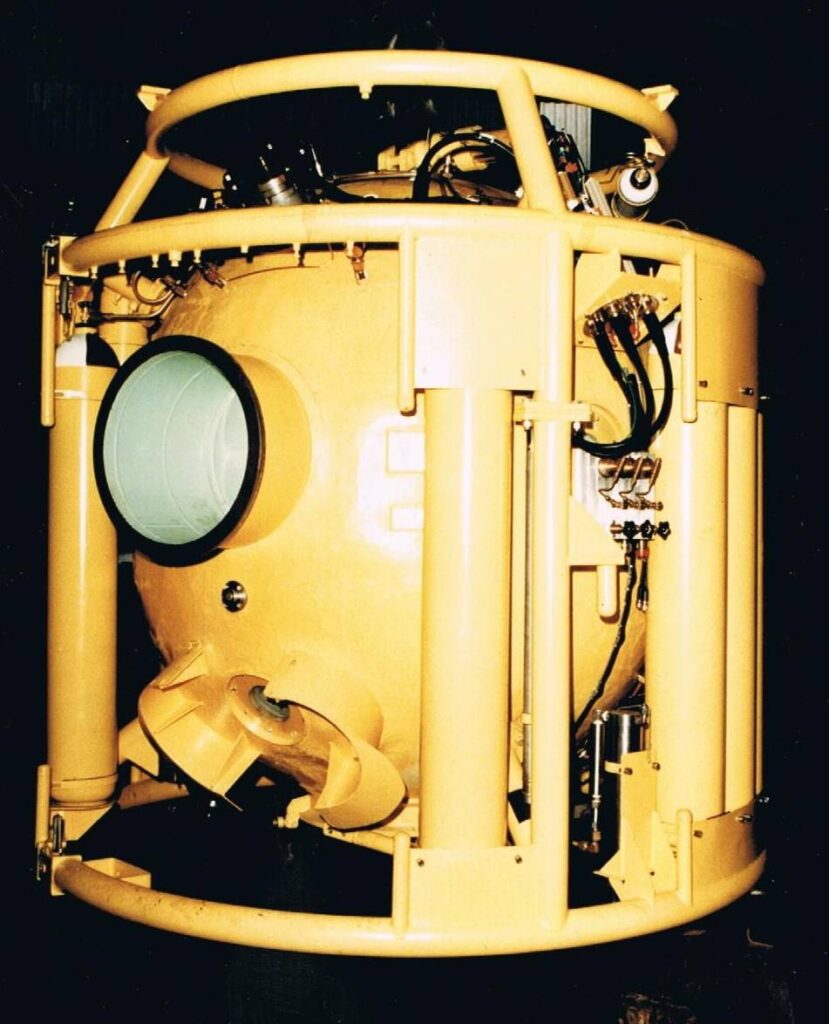
The iconic bell shape isn’t just aesthetic. Its rounded form disperses pressure evenly, preventing weak points and allowing the structure to endure the tremendous force of deep water. The result is a chamber built to shield occupants from the crushing environment outside.
Internal Life-Support Systems
Inside, systems work continuously to manage air quality, ventilation, and temperature. These setups monitor oxygen levels, remove carbon dioxide, and regulate the interior climate so divers can concentrate on their tasks rather than worrying about air supply. It functions like a compact, life-sustaining ecosystem.
Applications in Marine Exploration
Scientific Research
Researchers rely on diving bells as stable observation posts. They allow biologists and oceanographers to gather samples, document marine species, and perform experiments without battling currents or limited dive times. For scientists, it’s essentially an underwater field station.
Commercial Underwater Construction
In industrial settings, diving bells are indispensable for tasks such as inspecting offshore platforms, repairing submerged pipelines, and participating in complex engineering projects. They offer workers a safe, controlled environment from which to carry out challenging underwater operations.
Tourism and Recreational Use
Some tourism operators offer modified diving bell experiences, letting travelers descend into the sea without wetsuits or scuba training. These excursions offer a serene, window-seat perspective on marine life—more exploration, less adrenaline.
Safety Measures and Protocols
Pre-Dive Evaluations
Before deployment, crews conduct thorough inspections to verify the bell’s structural integrity and the functionality of all systems. Communication channels, emergency gear, and operational procedures are reviewed to ensure everyone is prepared for the dive ahead.
Emergency Readiness
Unexpected situations—rapid pressure changes, equipment failures, or wildlife encounters—require teams to respond immediately and correctly. Regular drills help crew members rehearse evacuation steps, pressure-management procedures, and surface-communication protocols.
Training and Qualifications
Operating or occupying a diving bell demands specialized training. Personnel learn the technical specifics of the equipment, emergency responses, and environmental awareness. Ongoing refresher courses keep skills sharp and prevent complacency.
Environmental Impact and Considerations
Effect on Marine Life
While diving bells support exploration, they can disturb sensitive habitats. Noise, movement, and the presence of equipment may disrupt local species. Responsible operators work to limit these disruptions and follow guidelines that protect marine environments.
Regulatory Oversight
International and national environmental rules guide how diving operations must be conducted. These frameworks ensure responsible conduct by requiring proper planning, impact assessments, and adherence to sustainable practices.
Sustainable Operational Practices
Efforts to reduce ecological impact include choosing environmentally safer materials, optimizing dive schedules to avoid harming wildlife, and using energy-efficient systems. The overarching goal is to explore without adding stress to delicate undersea ecosystems.
Future Innovations in Diving Bell Technology
Emerging Materials and Engineering
New lightweight composites, smarter structural supports, and improved buoyancy mechanisms are shaping the next generation of diving bells. These upgrades promise better safety, efficiency, and durability.
Integration with Robotics and AI
Future systems may work in tandem with autonomous underwater vehicles and AI-powered tools. Such integrations could allow bells to gather data more effectively, map unknown terrain, or coordinate complex tasks with minimal manual intervention.
Expanding Deep-Sea Potential
As these technologies evolve, access to deeper, more remote parts of the ocean becomes feasible. This opens doors to new scientific discoveries, archaeological finds, and environmental insights that remain hidden in the darker layers of the sea.
Final Thoughts
Diving bells have served as gateways to a world that most people will never see firsthand. Their history reflects centuries of innovation, and their continued development shows how committed we are to understanding the ocean’s mysteries.
With improvements in design, sustainability, and advanced technology, diving bells are poised to play an even greater role in underwater research, exploration, and industry. The more we refine them, the deeper we can safely travel—and the more we can uncover about the vast, uncharted spaces beneath the surface.
FAQs
Q1. What is a diving bell, and how does it operate beneath the surface?
A diving bell is a sturdy chamber—either fully enclosed or open at the bottom—used to lower divers into deeper water while preserving a breathable air pocket inside. As it descends, the surrounding water pressure compresses the internal air just enough to maintain a stable atmosphere.
Modern versions rely on an umbilical link to the surface that delivers air, heat, communication lines, and other essentials, turning the bell into a small, movable shelter for underwater work.
Q2. What variations of diving bells are commonly used?
Most bells fall into two familiar categories. The open or “wet” bell leaves its base unobstructed, giving divers freedom to slip in and out while submerged. The closed or “dry” bell functions more like a tiny pressurized room that can regulate temperature, pressure, and communications.
There are also hybrid designs that blend attributes of both styles to meet the needs of specialized operations—whether that means recovery work, inspections, scientific surveys, or intricate repairs.
Q3. How deep can a diving bell descend safely?
Its maximum depth is determined by engineering limits and human physiology. Early bells were restricted to shallower waters, but modern pressurized bells can be lowered several hundred meters when properly supported by surface systems. In practice, the divers’ ability to equalize and withstand pressure changes usually sets the ultimate limit rather than the bell’s structural strength.
Q4. Why rely on diving bells when submersibles are available?
Submersibles excel at observation, mapping, and remote sampling, yet they can’t replicate the precise dexterity of a trained diver. The diving bell serves as a stable launch point for hands-on tasks—welding, bolting, inspections, and intricate manipulations that demand human judgment. It also provides protection from currents and hazards, giving divers a secure place to retreat between work intervals.
Q5. What safety features are integrated into today’s diving bells?
Modern bells are built with multiple layers of protection: backup oxygen systems, carbon-dioxide scrubbers, internal heating, emergency release mechanisms, and clear communication links to the surface crew.
Lighting, gauges, and life-support monitors are arranged for quick checking even when visibility drops. Many systems also allow a controlled transfer from the bell directly into a decompression chamber, preventing dangerous shifts in pressure.
Q6. How do divers move in and out of a diving bell underwater?
For an open bell, the entry point is simply the bottom opening, which stays dry thanks to trapped air and internal pressure. Closed bells use a hatch system—either connecting to the underwater work area or to a surface decompression chamber once the bell is lifted. This sealed pathway protects divers from sudden pressure changes during ascent or recovery.
Q7. What roles do diving bells serve outside of industrial or commercial diving?
They appear in underwater archaeology, marine research, specialized training programs, and recovery missions. Historically, diving bells were among the first tools that allowed explorers to linger below the surface for meaningful periods, making them an important stepping stone in humanity’s long effort to understand and work within the underwater world.
Q8. Do diving bells still matter with the availability of ROVs?
ROVs are remarkable for inspection and remote manipulation, but they can’t improvise or react the way a human can when equipment snags or circumstances shift. In challenging situations, a diver supported by a bell—and working alongside an ROV—creates a flexible partnership that offsets the limitations of either system used alone.
Q9. How is a diving bell maintained between missions?
Routine care involves checking seals, welds, and pressure-bearing parts; testing oxygen delivery and scrubber systems; recalibrating instruments; and inspecting umbilical lines for signs of wear. Periodic structural assessments ensure the bell can endure repeated pressurization cycles without hidden fatigue or micro-damage.
Q10. What part did diving bells play in early underwater exploration?
Before the development of modern scuba systems, inventors relied on diving bells to remain underwater long enough to salvage ships, conduct experiments, or attempt bold exploratory ventures. Though simple by today’s standards, these early bells laid the groundwork for contemporary diving technologies and shaped the earliest chapters of underwater discovery.
Conclusion
The diving bell feels like a quiet mechanical companion to human curiosity—lowered slowly into a world that doesn’t quite welcome us, yet continues to pull us downward all the same. It’s an object filled with contradictions: cramped but strangely comforting, old in spirit yet still essential, straightforward on the outside while hiding layers of careful engineering within.
Walk through its history, from the rough wooden shells of centuries past to the precision-built chambers used today, and you begin to sense that the bell isn’t merely equipment. It’s a symbol of how we keep drifting toward the dimmer regions of the sea, where sound fades, time stretches out, and the water rearranges everything into something steadier, quieter, and oddly serene.
Add a Comment